

The conversation about exit valuation multiples for D2C gadget brands can quickly become confusing. Founders hear about massive deals and assume their brand commands similar numbers.
I have sat through enough acquisition meetings to know that the average exit valuation multiples for D2C gadget brands depend far more on operational reality than hype. You've built a D2C gadget brand.
Sales are growing. Customers love your products. Now you're thinking about the endgame. Exit valuation multiples matter. They determine how much your business is worth when you sell. For gadget brands, the numbers are shifting.
Let me break down what you need to know.
What Valuation Multiples Are We Talking About?

Valuation multiples are ratios used to price a business. The most common for D2C brands are:
Read Also: Against the Odds: The New Wave of Consumer Hardware Startup Funding
Revenue multiples. Enterprise value divided by annual revenue. Simple. Widely used.
EBITDA multiples. Enterprise value divided by earnings before interest, taxes, depreciation, and amortization. This is the gold standard for profitable businesses.
EBITDA margin. EBITDA divided by revenue. Acquirers anchor exit multiples to this . For public DTC top quartile brands, this sits at 18-26%. Private brands at $50M ARR should target 12-18% .
For D2C gadget brands, the numbers vary widely. Some trade at 2x revenue. Others command 10x or more. The difference comes down to growth, profitability, and brand strength.
Average Exit Valuation Multiples for D2C Gadget Brands
Revenue Multiples
Based on recent transactions, here's what you can expect:
Growth-stage D2C brands (2-8x revenue). Most profitable or near-profitable Indian D2C brands fall in this range. Hypergrowth brands with strong unit economics can command up to 15x net revenue .
Stable D2C brands (2.8-4.1x revenue). For smaller ecommerce businesses, the average lower bound is around 2.86x revenue, and the average upper bound is around 4.13x revenue .
Premium D2C brands (5-10x revenue). Brands with strong customer retention, loyal followings, and defensible niches command higher multiples .
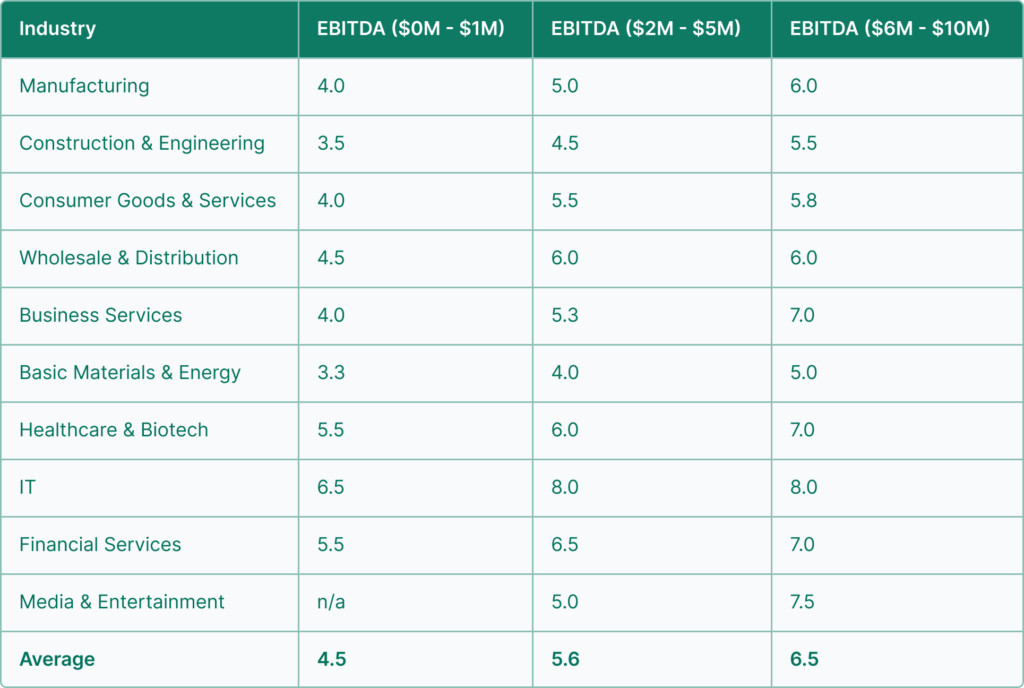
EBITDA Multiples
Average range (4-8x EBITDA). Most DTC brands with attractive KPIs are rated at 3.5x to 5.5x EBITDA. Standout brands can reach as high as 7.5x .
Premium range (8-14x EBITDA). High-growth, scalable D2C businesses command higher multiples. Lenskart trades at 55x EV/EBITDA on a projected basis—a premium justified by its 38% EBITDA CAGR .
Comparison to other sectors. Ecommerce branded DTC businesses typically see 5.0x-9.0x EBITDA multiples . Consumer products generally range from 5.0x-8.0x .
Amazon FBA Brands
For Amazon-centric brands, valuations range from 1.0x to 4.5x EBITDA. Well-positioned brands with solid fundamentals are most often valued between 2.0x and 3.0x .
Examples from Indian D2C Gadget Brands
Let's look at actual valuations:
boAt: Valuation expectation of $1.3-1.5 billion (3.5-4x FY25 revenue). Revenue dipped 1% in FY25 to Rs 3,098 crore, but profitability surged with EBITDA up over 22x .
You Must Also Like: Funding and Exits in Venture Capital: Navigating the New Reality for Hardware Startups
Lenskart: Trading around Rs 464, with Citi setting a target of Rs 500 based on 55x Dec'27 EV/EBITDA. The premium is justified by its 38% EBITDA CAGR FY26-FY28. At the time of the report, Citi noted Lenskart shares were trading around Rs 464, implying about 7.8% upside . For comparison, broader consumer peers like Nykaa, Eternal, Swiggy, Trent, Titan, and DMart typically trade in a 35-50x range .
Urban Company: Valued at $1.7 billion at IPO, translating into roughly 11x FY25 revenue. Revenue rose 36% in FY25 to Rs 1,261.8 crore while narrowing losses .
Licious: Post-money valuation of $1.45 billion—around 14.5x FY25 revenue. Revenue grew 16% in FY25 to Rs 795 crore .
What Drives Valuation Multiples Up?
Growth Rate
Revenue growth is the biggest driver. Investors pay premium multiples for high-growth brands. Lenskart's 38% EBITDA CAGR justified its 55x multiple . Brands with slowing growth see compression—boAt's revenue dipped 1%, yet valuation holds due to improved profitability .
Profitability
Profitability matters more than ever. VCs now reward sustainable business models, not growth at any cost . EBITDA margin targets for private DTC brands at $50M ARR are 12-18% .
Brand Strength
Culturally relevant, community-driven brands command premium valuations. E.l.f. Beauty's $1 billion acquisition of Hailey Bieber's Rhode in May 2025 highlighted this. The DTC-only brand had just 10 SKUs and $212 million in revenue but achieved a premium valuation .
Customer Retention
Repeat purchase rate matters. Brands with strong customer loyalty and lower acquisition costs trade at higher multiples .
What Drags Valuation Multiples Down?
Small scale. Subscale businesses often fall below industry averages .
Low margins. Inventory-heavy, import-dependent businesses face more scrutiny .
Customer concentration. Relying too heavily on one channel or customer is a risk factor.
Key-person dependency. Businesses dependent on founders trade lower .
When to Exit and When to Hold?
The decision to exit involves more than multiple calculations. Current market conditions, personal goals, and business trajectory all matter.
The UK market shows median EV/EBITDA multiples for deals under £250M stable at 6.2x in H1 2025 . US median multiples are higher at 10.8x, reflecting the inclusion of larger transactions .
Sector performance varies significantly. Technology, media, and telecom valuations have risen due to strong SaaS activity . Gadget brands with software components may benefit from this trend.
The decision comes down to whether your brand's growth trajectory justifies waiting for a higher multiple. If your brand is on track to cross a revenue threshold that commands a significantly higher multiple in 12-18 months, patience may be rewarded.
The Final Thoughts
The D2C gadget sector sits at a crossroads. Public comps like Apple trade at 9.9x revenue and 28.1x EBITDA . But private Indian D2C brands typically command 2-8x revenue .
The gap exists because investors discount for size, execution risk, and market maturity. As Indian D2C brands scale, the multiples should compress the gap.
But here's the reality: investors are no longer paying for hyper-growth alone. They want profitable growth. Unit economics matter more than pure revenue . Brands with strong retention, high EBITDA margins, and defensible customer bases will command premium multiples.
If you're building a D2C gadget brand with an exit in mind, focus on the fundamentals. Build a brand, not just a sales channel. Target 12-18% EBITDA margins at scale. Keep customer acquisition efficient.
That's how you maximize your exit multiple.