I have been testing smart home gadgets for years. The big names like Google and Amazon make solid products. But the real innovation? That is coming from startups. Small teams with fresh ideas. They are not afraid to take risks.
I spent weeks digging through CES 2026 announcements, funding news, and early product launches. I also tested a few of these myself. This is my honest take on the best smart home gadgets from early stage startups in 2026.
What Is the Best Smart Home Gadgets from Early Stage Startups?
The founders of August Home are back. They sold August to Yale in 2018. Now they have a new startup called Doma. And it is a complete rethink of the front door.
Read Also: AI Agent Fleet Management for Small Business: The 2026 Guide to Autonomous Operations
Doma embeds smart lock tech, facial recognition, radar sensors, and a motorized opener directly into the door itself. No batteries. No bridges. It is hardwired for continuous operation.
I have used retrofit smart locks for years. They work. But they have problems. Batteries die. The deadbolt misaligns. The app crashes. Doma solves all of that.
The good: It uses Ultra-Wideband for frictionless authentication. The door opens as you approach. It supports Matter for broad compatibility.
The catch: You have to replace the whole door. It will be available through partner manufacturers starting Summer 2026. Pricing is comparable to a premium door with hardware and electronics purchased separately.
Who it is for: New home builders. Luxury renovations. Anyone tired of swapping smart lock batteries.
The Ambient AI That Actually Understands You
I have tried voice assistants that claim to be "smart." They are not. They respond to commands. They do not understand context. Sorcerics is different.
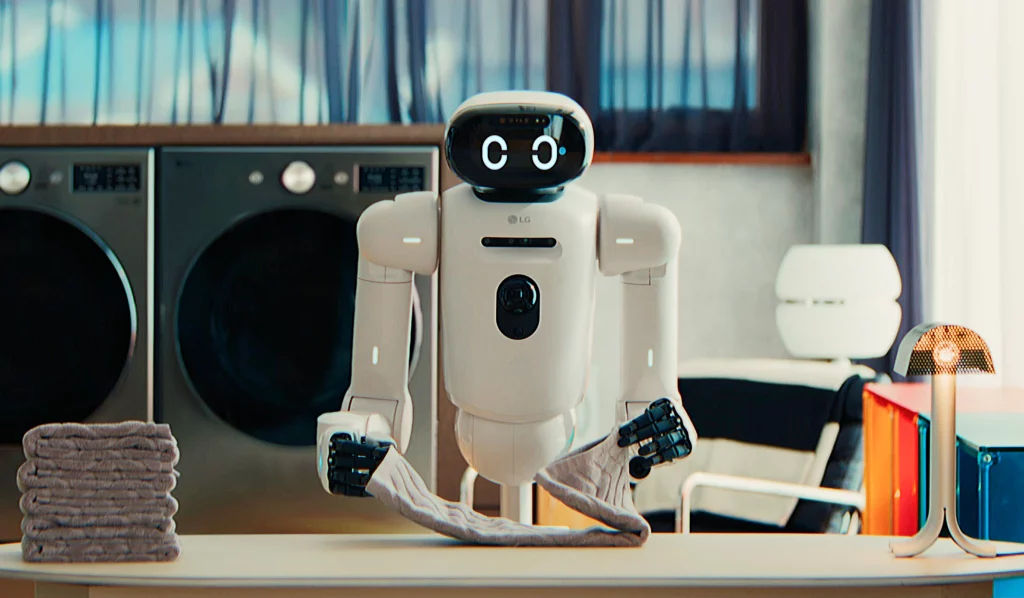
This startup got funding from Naver D2SF. They are building an Ambient AI home system. It uses a single camera and proprietary LLMs to analyze gestures, behavior, and environmental cues.
Here is the example that sold me. You lie down on the couch. A normal smart home turns off the lights. Sorcerics understands you are ready for sleep. It adjusts the lighting gradually. It does not just turn them off abruptly.
The tech: It runs up to five AI models on-device. That means privacy. Your data does not go to the cloud. They also claim hardware costs are one-quarter of competitors.
The catch: It is still early. Beta testing in North America right now. Kickstarter launch expected in Q1 2026.
Who it is for: People who want a home that adapts to them. Not the other way around.
The Flying Home Robot
This one sounds like science fiction. A Singapore-based startup called Entropy Technology just raised seed funding. Their first product is the Flyer O1. A family flight robot.
You Must Also Like: Consumer Startups Winning Customer Loyalty
I was skeptical too. Why fly? The team explains that ground devices are limited by obstacles. Aerial devices can cover more space. They can reach high areas that ground robots cannot.
What it does: The Flyer O1 is a "smart butler." It autonomously cruises your home. It monitors for anomalies. It recognizes missing items. It coordinates family schedules. You can give voice commands.
Privacy: The device stores data locally. Images are not uploaded to the cloud. They are automatically deleted after seven days.
The catch: It is launching later in 2026. Pricing is not announced yet. The business model is hardware plus software subscription.
Who it is for: Large homes. Families with complex schedules. Early adopters who want the next big thing.
The Wellness Robot That Measures and Acts
Rhem is an AI wellness companion. It launches on Kickstarter on July 20, 2026. It reads vital signs and home air quality. Then it acts on that data.
What it measures: Blood pressure. Heart rate. SpO2. ECG. Body temperature. Home air quality including CO2, formaldehyde, and gas leaks.
It also has a mmWave radar for fall detection. No camera needed for that.
The smart part: An AI engine runs on-device. It reads signals. It explains them in plain language. It can schedule appointments. Find nearby clinics. Organize follow-ups.
The catch: It is a Kickstarter. Early-stage hardware. You are taking a risk. But the specs are impressive.
Who it is for: Families with elderly members. Anyone who wants to track health metrics without wearing a device.
The Inexpensive Affordable Option: Mui Board
Mui Lab showed a smart home controller that looks like a simple piece of wood. It has an LED display that appears when needed.
What caught my attention is the mmWave sensor. It tracks sleep metrics like heart rate and breathing. No wearables. No mattress sensors. Just a wooden board on your nightstand.
The tech: It uses millimeter-wave sensors to detect presence and vital signs. It is "calm tech." It does not demand your attention.
The catch: Pricing and availability are not confirmed. It was at CES Unveiled 2026.
Who it is for: People who want sleep tracking without wearing a device.
The Lock That Scans Your Veins
Lockin showed the V7 Max at CES 2026. It has wireless optical charging. Palm and finger vein scanning. Facial recognition. Matter support.
The good: Vein scanning is more secure than fingerprints. You cannot fake a vein pattern. The lock also has a camera and touchscreen.
The catch: It is expensive. The predecessor started at around $1,270. No pricing announced for the V7 Max.
Who it is for: Luxury homes. Security-conscious buyers.
The Aqara Presence Sensor That Tracks 10 People
Aqara already makes one of the best mmWave presence sensors. The FP400 is an upgrade. It can track up to 10 people at once.
It can trigger automations based on whether someone is standing, sitting, or lying down. That is new. Standard presence sensors only detect motion.
The good: Matter-compatible. Great for complex automations.
The catch: No release date or pricing announced.
Who it is for: Large households. Smart home enthusiasts.
Practical Advice for Buying Early-Stage Smart Home Gadgets
I have backed dozens of Kickstarters. Some delivered. Some did not. Here is my honest advice.
Do your research. Look at the team's background. Have they shipped hardware before? Sorcerics has ex-Google engineers . Doma has the founders of August Home. That is a good sign.
Check the timeline. Many early-stage products miss their launch dates. Build that into your expectations.
Consider the ecosystem. Matter support is a big plus. It means the device will work with other platforms.
Privacy matters. On-device AI is better than cloud-based processing . Your data stays local.
Final Thoughts
The best smart home gadgets from early stage startups are not about gimmicks. They are about solving real problems. Doma rethinks the door. Sorcerics rethinks context. Rhem rethinks home health. These are not just incremental updates. They are fundamental shifts.
Will all of them succeed? No. That is the nature of startups. Some will fail. Others will get acquired. A few will become household names.
But if you want the cutting edge, this is where you find it. Not in the big stores. Not in the established brands. In the garages, the labs, and the Kickstarter pages of people who are building the future of the smart home.