
The fundraising market for AI startups in 2026 has completely transformed from just two years ago. Back in 2024, you could raise a seed round with a solid demo and a compelling vision.
Today, that approach will get you a polite rejection before you finish your pitch deck . Investors are now demanding real revenue, actual customer traction, and a defensible moat even at the seed stage.
What Is Vertical AI Startup Seed?

I have spent time analyzing the latest data and speaking with investors about what they are actually looking for. Here is the honest breakdown of vertical ai startup seed round metrics and benchmarks that matter in 2026.
The New Reality: Seed Looks Like Yesterday's Series A
The seed funding landscape has shifted dramatically. What used to be a product-and-vision round now looks much closer to what Series A required a few years ago.
Read Also: Average Exit Valuation Multiples for D2C Gadget Brands Guide
European core hubs (UK, France, Germany, Nordics): Competitive seed rounds land in the €2–4M range. Top-tier GenAI infrastructure or vertical plays occasionally push to €6–8M .
North America: The median seed-stage pre-money valuation for AI startups is $17.9M. This represents a 42% premium over non-AI companies at the same stage .
Extreme outliers: Several former Tier-1 VC partners are now commanding $50–65M seed rounds at $200M+ pre-money valuations . These are the exception, not the rule.
What this means for you: If you are building a horizontal AI wrapper, your valuation will be much closer to the €6–10M pre-money range. If you have deep vertical workflow integration, you can command the premium.
The Numbers Investors Actually Want to See
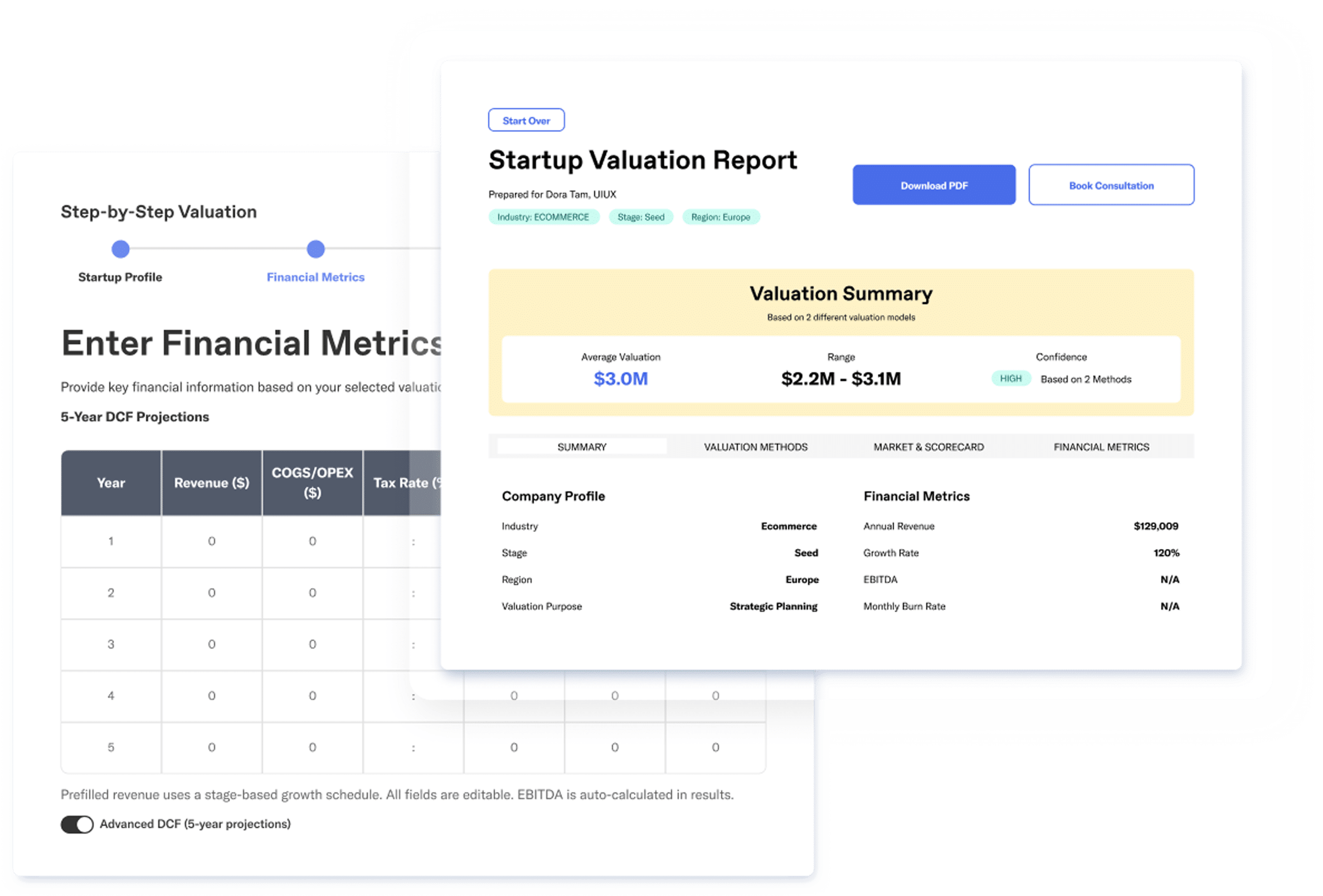
VCs in 2026 are surprisingly specific about the benchmarks they require at seed stage.
Revenue Metrics
| Metric | Competitive Range | Red Flag Zone |
|---|---|---|
| ARR | €500K–1M+ | Below €200K with flat growth |
| YoY Growth | 2–3× | Below 100% growth |
| MoM Growth | 5–10% | Below 5% in €200K–1M ARR range |
One shift that surprises many founders: investors are openly asking for €500K+ ARR even at the seed stage . If you are below that, you need an exceptional growth story or unusually strong team pedigree to compensate.
Retention Metrics
Logo churn: Below 3% per month, or at least early signals of this trajectory .
You Must Also Like: Funding and Exits in Venture Capital: Navigating the New Reality for Hardware Startups
Net Revenue Retention (NRR): 100% or above. This signals that your installed base is expanding even if you are not adding new customers .
Gross margin: 60–70% minimum. Sub-60% triggers hard questions about your unit economics .
Efficiency Metrics
Runway: 12–24 months of cash .
Burn multiple: Under 2.0× (how much you burn per dollar of net new ARR) .
LTV/CAC: No hard rule at seed stage, but investors will expect a clear path to exceeding 3× .
The Vertical AI Premium
Here is where vertical AI startups can actually outperform the broader market.
Vertical AI agents accounted for 48.3% of AI transactions and 54.6% of capital raised in early 2026 . Investors are clearly favoring vertical specialists over horizontal tools.
The valuation gap is widening. Wrapper-style startups are now assigned valuation ceilings of 3–4× ARR, making venture math nearly impossible to justify . By contrast, top-tier vertical agents with proven data moats can command 20–50× ARR .
A vertical AI company with deep workflow integration can achieve NRR above 130%, meaning the installed base expands faster than it churns . That retention profile supports much higher valuations than horizontal tools.
What Vertical AI Defensibility Looks Like?
Investors have become much more sophisticated about what actually creates a defensible moat .
1. Data Flywheel
The question is not just whether you have proprietary data. It is whether your agent generates new proprietary data with each task .
The most defensible vertical agents improve their performance with every customer interaction in ways that a competitor starting today cannot replicate, even with access to the same foundation models.
2. Workflow Ownership
Harvey (legal AI), Sierra (customer service agents), and Hippocratic (healthcare AI) represent the archetype investors are chasing . These companies do not help lawyers draft documents.
They sit inside the billing workflow, the case management system, and the compliance process. Switching them out is an operational restructuring, not a software decision.
3. Deep Integration
For a proptech startup like VerbaFlo, which raised $7M in seed funding in March 2026, the defensibility comes from vertical specialization and integration into existing Property Management Systems .
A purpose-built platform that deeply understands the nuances of the resident lifecycle creates switching costs that a generic chatbot cannot match.
4. Proprietary Technology
As one managing director noted: "It's not enough to build a vertical wrapper product on top of an existing model. The question is: do you have proprietary data which will produce outputs that nobody else can replicate?"
New Diligence Requirements
The diligence process itself has transformed . A round that once took a week to close now takes one to two months.
Gross margin trajectory: AI infrastructure costs create a variable cost structure. Investors want to see your gross margin modeled at 10× current usage .
Dependency risk scoring: Which foundation models does your agent depend on? If Anthropic changes its API pricing, what is your migration path? Companies that demonstrate multi-model compatibility command a premium .
Compute efficiency: Investors look at cost-per-completed-task and whether the architecture can sustain economics at 100× current load .
The Team Benchmark
Headcount for a seed-ready AI startup is roughly 8–20 FTEs : 4–10 engineers across model, infra, data, and full-stack; 1–3 GTM roles; and a founder/CEO still close to product and first customers.
Warning: Engineering-only teams with no commercial muscle are a growing concern for seed investors . You need a credible path to repeatable sales, and ideally someone who is already closing deals.
Red Flags That Will Kill Your Round
-
ARR below €200K with no clear growth acceleration
-
High logo churn or inability to convert pilots into recurring contracts
-
No clarity on data rights and privacy—weak governance is a dealbreaker for enterprise AI
-
Overly broad product roadmap instead of a focused wedge
-
Pure "wrapper" apps with no proprietary data, infra depth, or UX lock-in
-
Engineering-only team with no commercial plan
Quick Benchmark: Where Do You Stand?
| Signal | Competitive Range | Below This = Trouble |
|---|---|---|
| ARR | €500K–1M+ | Below €200K with flat growth |
| YoY Growth | 2–3× | Below 100% |
| Gross Margin | 60–70%+ | Sub-60% |
| Logo Churn | <3% monthly | Above 3% |
| NRR | 100%+ | Below 100% |
| Runway | 12–24 months | Under 12 months |
| Burn Multiple | Under 2.0× | Above 2.0× |
Final Thoughts
The vertical AI seed market is competitive. Investors are demanding more evidence of traction and defensibility than they did two years ago. But the premium for vertical AI startups is real.
If you can demonstrate a genuine data moat, deep workflow integration, and a clear path to revenue, you can command valuations that were previously reserved for later-stage companies.
Focus on your proprietary data, your commercial muscle, and your vertical depth. The rest will follow.